
Small businesses today face an overwhelming challenge: visibility. You could offer the best food in your neighborhood, the most reliable plumbing service, or the friendliest salon in town, but if people can’t find you online, your growth will be limited. Gone are the days when foot traffic and word of mouth alone could sustain a business. In 2025, success depends on how easily your business can be discovered in Google searches, map results, and local directories.
That’s where local SEO comes in. Local SEO — search engine optimization focused on your community — is the process of making sure that when someone types “best café near me” or “AC repair in Delhi,” your business shows up at the top. It sounds technical, but the good news is that one of the simplest, fastest, and most powerful tools for boosting local SEO is completely free: the humble business listing.
A free business listing is more than just a digital business card. It’s a profile of your company on platforms like ScoreCity, Google Business Profile, Yelp, and Bing Places that allows customers to discover you, contact you, and trust you — all without you spending a rupee. Setting one up takes less than ten minutes, but the impact on your visibility and lead generation can last for months or even years.
In this complete guide, we’ll explore the power of free business listings, why they matter for local SEO, how they help small businesses grow, and how you can create one that actually ranks. Whether you’re a shop owner in Pune or a freelancer in Bangalore, by the end of this blog, you’ll see why business listings are not just optional — they’re essential.
What Is a Free Business Listing?
Before we dive deeper into how business listings improve local SEO, let’s get clear on what a free business listing actually is.
A business listing is essentially an online profile for your company that appears on directories, search engines, or specialized platforms. At its simplest, it contains your Name, Address, and Phone number (often called NAP). But modern listings have evolved far beyond that. Today, a typical business listing includes:
- Your official business name
- Physical address or service area
- Phone numbers (sometimes multiple)
- Email contact details
- Website link (for businesses that have one)
- Categories (e.g., bakery, electrician, café)
- Business hours
- Photos and videos of your business, products, or services
- Customer reviews and ratings
Think of a free business listing as your digital storefront. Just as people might glance at your shop window to decide whether to step inside, they scan your online listing before deciding whether to call, visit, or make a purchase.
Examples of Free Business Listings
There are many platforms that allow you to create a profile at no cost. A few of the most popular include:
- ScoreCity – A growing, user-friendly directory that makes free business listing quick and straightforward. Businesses can sign up, verify with OTP, and start attracting local customers instantly.
- Google Business Profile – The most critical listing for local SEO. It powers Google Maps and the “3-pack” of results that often appear at the top of local searches.
- Yelp – Highly trusted for reviews, especially in restaurants, hospitality, and service industries.
- Bing Places for Business – Essential for tapping into Bing’s user base, which still accounts for millions of searches every day.
Each of these platforms plays a slightly different role. For example, a café might see the biggest benefit from Google and Zomato listings, while a home repair service would rely heavily on ScoreCity and Yelp. The key is to create listings on multiple platforms so your business appears wherever customers are searching.
Why “Free” Makes All the Difference
For small businesses with tight budgets, the word free isn’t just appealing — it’s empowering. Digital ads can drain budgets quickly, and even SEO campaigns can take months to pay off. But a free business listing costs nothing and begins working almost immediately.
Within ten minutes, you can set up a profile on ScoreCity, upload your information, and become discoverable in local searches. For many small businesses, that’s the difference between being invisible online and becoming the go-to choice in their neighborhood.
Why Local SEO Matters for Small Businesses
If you run a small business, chances are most of your customers come from your local area. A bakery in Indore doesn’t need to rank for “cakes in London” — it needs to show up when someone nearby searches “best bakery near me.” That’s the essence of local SEO: making sure your business appears in search results that matter most to your immediate community.
The numbers speak for themselves. Studies show that 46% of all Google searches are local, and of those, 88% of people call or visit a business within 24 hours of their search. That means nearly half of all online activity is focused on finding nearby businesses — and the intent is incredibly strong. When someone types “plumber in Delhi” or “cafés near me,” they aren’t browsing for fun; they’re ready to buy, call, or walk in.
For small businesses with limited budgets, this is a golden opportunity. Local SEO levels the playing field. You don’t need to compete with national brands for broad keywords like “best coffee shop in India.” Instead, you can focus on showing up for searches in your neighborhood, city, or service area — exactly where your customers are looking.
The Visibility Challenge
The challenge is that many small businesses remain invisible online. They might rely on traditional word of mouth or believe that having a Facebook page is enough. The reality is that if you’re not visible on Google Maps, local directories, or review sites, you’re missing out on the majority of customers who prefer to search first, then act.

This is where a free business listing becomes a game-changer. A well-optimized listing ensures your business shows up in relevant searches, complete with your phone number, directions, photos, and reviews. In fact, businesses with complete listings are 70% more likely to attract customers than those without.
Why Reviews and Trust Are Critical
Another major factor in local SEO is trust. People want reassurance before they spend their money. According to research, 88% of consumers trust online reviews as much as personal recommendations. A business that appears with dozens of positive reviews instantly has an edge over competitors with no online presence.
Platforms like ScoreCity and Google Business Profile allow customers to leave reviews directly on your listing. Every positive comment boosts your credibility, strengthens your SEO ranking, and nudges undecided customers closer to choosing you.
Local SEO as the Great Equalizer
The beauty of local SEO is that it doesn’t favor the biggest brands — it favors the most relevant and trusted ones. A small café with an active listing, fresh reviews, and accurate details can outrank a multinational chain in local search results. That’s why local SEO is often called the great equalizer: it allows small businesses to compete head-to-head with larger ones without spending massive advertising budgets.
In short, local SEO is not optional anymore. It’s the bridge between your business and the customers actively looking for what you offer. And one of the fastest, most effective ways to strengthen your local SEO is to create and optimize a free business listing.
How Free Business Listings Boost Local SEO
At this point, you might be wondering: how does something as simple as a free business listing make such a big difference in search rankings? The answer lies in how search engines like Google decide which businesses to show when someone searches for services nearby.
When you create a profile on a directory like ScoreCity or Google Business Profile, you’re not just adding your details for customers to see. You’re also sending important signals to search engines about your business’s legitimacy, relevance, and trustworthiness. These signals are what boost your local SEO.
Let’s break it down.
Consistency Builds Trust (NAP
Search engines prioritize reliability. If your business name, address, and phone number (often called NAP) appear consistently across multiple platforms, Google sees you as trustworthy.
For example, imagine you run “BrightFix Plumbing Services” in Delhi. On your website, you list one phone number. On Facebook, it’s slightly different. On a directory, your business is written as “Bright Fix Plumbers.” These inconsistencies confuse search engines, and they lower your chances of appearing in local results.
But if you have the exact same details on ScoreCity, Google Business Profile, Yelp, and Bing Places, your credibility skyrockets. That consistency boosts your local SEO ranking and helps customers find you faster.
Citations Are Votes of Confidence
Every time your business is listed on a reputable directory, it creates a citation — essentially, a reference to your company online. Search engines treat these citations like votes of confidence. The more high-quality citations you have, the more Google believes your business is legitimate and relevant.
Think of it like networking. The more people mention your name in the right circles, the more respected you become. Free business listings provide that kind of visibility, and when your competitors aren’t taking advantage of them, you instantly gain an edge.
Reviews Influence Rankings and Decisions
Local SEO isn’t just about algorithms — it’s also about customer behavior. Reviews play a critical role in both.
When customers leave positive reviews on your ScoreCity or Google profile, it does two things:
- It improves your position in local search results. Google gives preference to businesses with more and better reviews.
- It influences customer choices. A business with 50 glowing reviews will almost always get picked over one with none.
For example, if two cafés appear in a “best café near me” search, but one has dozens of positive reviews while the other has none, guess which one gets the clicks.
Backlinks Add SEO Power
Most free business listings allow you to add a link to your website. These links, known as backlinks, are one of the strongest ranking factors in SEO. When reputable sites like ScoreCity or Yelp link back to your website, Google interprets it as a sign of authority.
Even if you don’t have a strong website yet, collecting backlinks from business directories helps establish your presence and improves your chances of ranking over time.
The Benefits in Action
By now, you know that free business listings are good for SEO. But theory is one thing — what really matters is how these listings affect your day-to-day business growth. Let’s look at ten powerful ways a free business listing can transform your small business, not as abstract ideas but as real-world results you can see and measure.
1. Visibility That Brings Customers to Your Door
The first and most obvious benefit is visibility. When your business is listed on platforms like ScoreCity, you suddenly appear in front of people who are already searching for your products or services. This isn’t like putting up a billboard and hoping the right person sees it — it’s targeted visibility at the exact moment someone is ready to buy.
Imagine you own a bakery in Indore. A tourist searches “best bakery near me” on their phone. Because your listing is active and optimized, your café appears on Google Maps and ScoreCity. That simple visibility turns a stranger into a paying customer.
2. Stronger Local SEO
Free business listings don’t just make you visible — they make you discoverable. Every time you add your Name, Address, and Phone number (NAP) consistently across platforms, you strengthen your local SEO footprint.
For example, “Sharma Electricals” in Delhi lists their details on ScoreCity, Google Business Profile, Yelp, and Bing Places. Google sees the consistency and rewards the business by pushing it higher in local search results. That means when someone nearby searches “electrician in Delhi,” Sharma Electricals is more likely to appear before competitors.
3. Trust That Converts Browsers into Buyers
Being found online is great, but customers also want to know they can trust you. A bare listing with just a name and phone number won’t inspire much confidence. But a listing with a professional description, photos, business hours, and reviews tells a very different story.
Take, for example, a customer choosing between two salons. One has no reviews, no photos, and incomplete details. The other — your salon — has a polished profile on ScoreCity, glowing reviews, and updated service hours. The decision becomes obvious.
4. Leads Without Advertising Costs
Traditional advertising is expensive. Whether it’s Google Ads or Facebook campaigns, once you stop paying, your visibility disappears. A free business listing, on the other hand, keeps generating leads around the clock.
Consider a plumber who sets up a ScoreCity listing. Without spending a rupee on ads, his phone starts ringing with inquiries from people who searched “plumber near me.” That’s the kind of evergreen lead generation small businesses need to thrive.
5. Customer Reviews That Build Reputation
In today’s digital age, reviews are the new word of mouth. A free business listing allows happy customers to leave testimonials directly on your profile. Over time, these reviews create a powerful reputation engine.
For instance, a family restaurant in Pune listed on ScoreCity started encouraging diners to leave short reviews. Within three months, they had 45 positive ratings. Not only did their listing climb higher in directory results, but walk-in traffic also increased because people trusted the reviews.
Top Free Business Listing Sites You Should Use
Now that we’ve explored the benefits of free business listings, the next question is: where should you list your business? With hundreds of directories available, it’s tempting to spread yourself thin. But not all listing sites are created equal. Some carry more weight with search engines, others specialize in certain industries, and a few are designed specifically for small and local businesses.
Here are the top free business listing sites every small business should consider — with ScoreCity leading the way.
ScoreCity — The Local Growth Engine
When it comes to free business listings that are simple, effective, and designed with small businesses in mind, ScoreCity is hard to beat.
ScoreCity’s biggest advantage is accessibility. You don’t need advanced technical knowledge to get started. In just a few minutes, you can:
- Sign up with your phone and email.
- Verify your profile with an OTP.
- Fill out your details: business name, services, contact number, and address.
- Add a Google Maps link for accuracy.
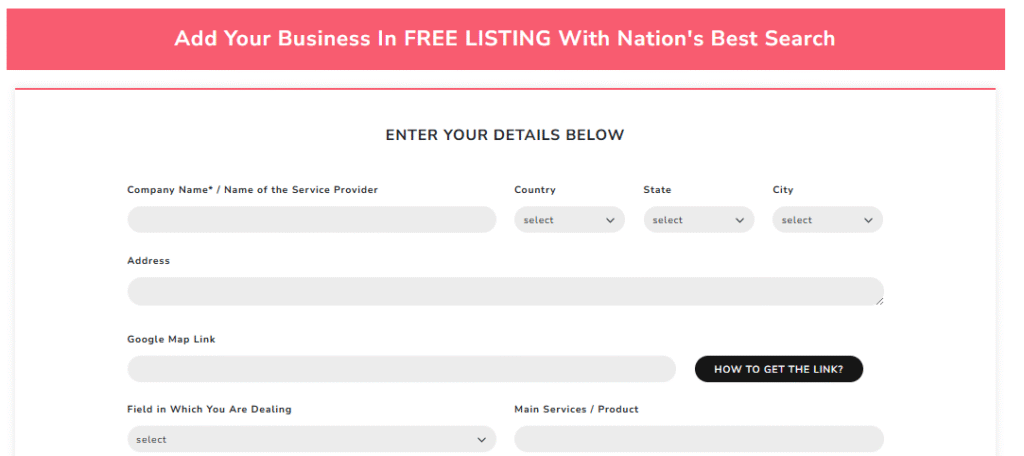
Once listed, your business becomes discoverable to customers searching in your category and location. The platform also encourages reviews, which boosts both visibility and credibility. For businesses that are new to digital marketing, ScoreCity offers the perfect first step into online visibility.
Google Business Profile — The Must-Have
No discussion about free business listings would be complete without Google Business Profile (GBP). This is the cornerstone of local SEO. It powers the “local pack” — the map and three listings that appear at the very top of Google searches.
For example, if someone searches “best café near me,” those top three café listings you see above the website results are Google Business Profiles. Appearing here can transform your business overnight.
Setting up GBP is free and relatively simple, but it requires careful optimization: accurate details, high-quality photos, regular posts, and encouraging customer reviews.
Yelp — Reputation Builder
Yelp remains one of the most influential review platforms, especially in hospitality and services. Customers often check Yelp ratings before making a decision, and search engines trust Yelp’s authority.
For a restaurant, spa, or repair service, being listed on Yelp can generate valuable leads — particularly from customers who prioritize reviews over anything else. The key is to maintain your Yelp profile actively and respond to feedback, both positive and negative.
Bing Places for Business — The Overlooked Gem
While Google dominates the search engine market, Bing still processes billions of searches every year. Ignoring Bing means leaving potential customers behind. Bing Places for Business is free, easy to set up, and ensures your business reaches this audience.
One added benefit? Bing automatically imports data from your Google Business Profile, making setup seamless.
Industry-Specific Platforms
Depending on your business type, industry-specific listing sites can also make a huge difference.
- Zomato for restaurants and cafés.
- TripAdvisor for travel, hotels, and attractions.
- Houzz for interior designers, contractors, and home services.
- Justdial and Sulekha for service providers in India.
Being present on these platforms not only boosts visibility but also connects you directly with audiences who are actively searching in your niche.